






Computing Facilities
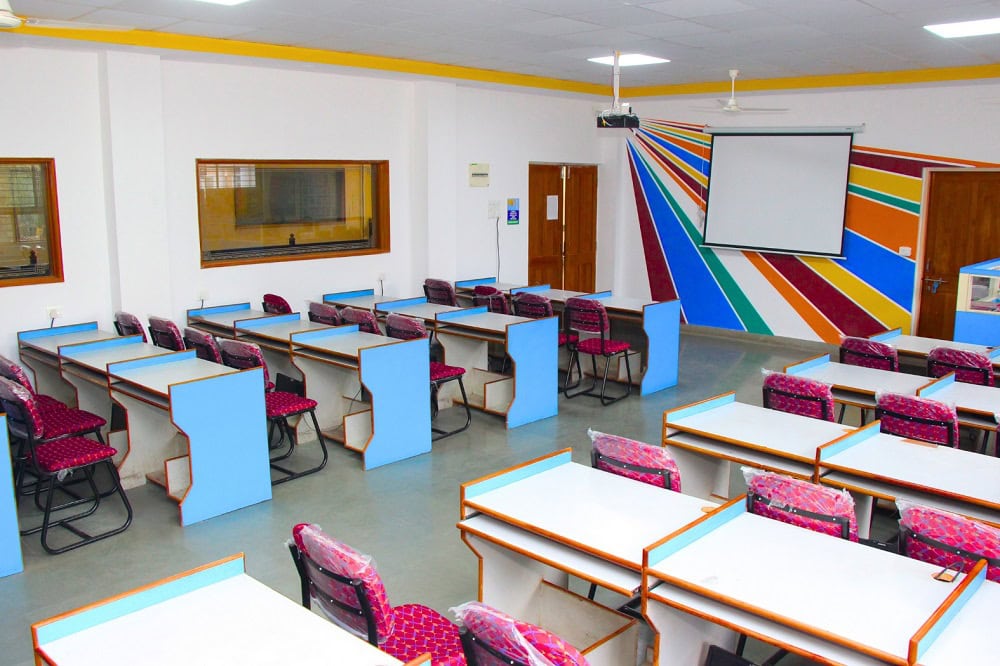
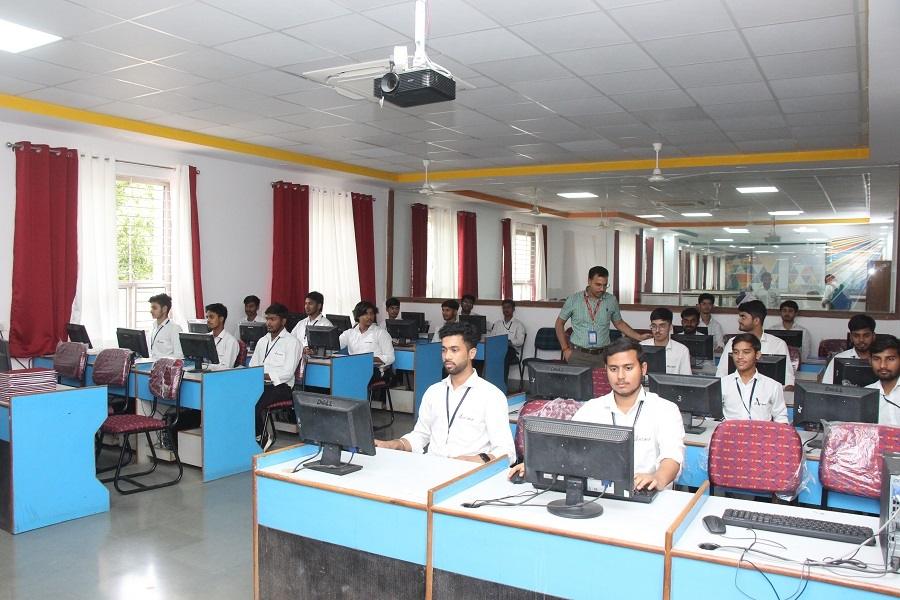
The AIML Department provides modern computing infrastructure to support
teaching, practical training, research, innovation, and project development in
Artificial Intelligence and Machine Learning. The facilities include well-equipped
computer laboratories, high-performance computing systems, AI/ML software tools,
programming environments, cloud-based platforms, and access to digital learning
resources. Students are provided with hands-on exposure to Python, Machine
Learning, Deep Learning, Data Science, Computer Vision, Natural Language
Processing, Generative AI, and other emerging technologies.
1. AI & Machine Learning Laboratories
Specialized laboratories provide an environment for practical learning and
experimentation in Artificial Intelligence, Machine Learning, Deep Learning, Data
Science, Computer Vision, Natural Language Processing, Generative AI, and
related technologies.
2. High-Performance & GPU Computing
High-performance computing resources, including GPU-enabled systems where
available, support computationally intensive applications such as Deep Learning,
image processing, model training, simulation, large-scale data analysis, and AI
experimentation.
3. Software & Development Tools
Students and faculty have access to essential programming languages, IDEs,
AI/ML frameworks, libraries, databases, visualization tools, version-control
platforms, and development environments required for academic, research, and
industry-oriented projects.
Examples: Python, Jupyter Notebook, NumPy, Pandas, Matplotlib, Scikit-learn, TensorFlow,
PyTorch, OpenCV, SQL, Git/GitHub and Visual Studio Code.
4. Cloud Computing Facilities
Cloud-based platforms provide opportunities to work with scalable computing,
storage, databases, AI services, model training, application deployment, and
modern cloud technologies. Students gain practical exposure to industry-relevant
cloud environments.
5. Research & Innovation Facilities
The department promotes research and innovation through computing resources,
technical infrastructure, research software, digital databases, project facilities, and
collaborative environments. Students and faculty are encouraged to undertake
research in emerging areas of AI and Machine Learning.
6. Digital Learning Resources
Students and faculty have access to digital learning resources including e-books,
online courses, research papers, journals, documentation, technical repositories,
tutorials, and other online academic resources to support continuous learning and
professional development.
7. Maintenance & Technical Support
Regular maintenance, system upgrades, software installation, security updates,
troubleshooting, and technical support are provided to ensure reliable operation of
laboratories and computing infrastructure. The facilities are periodically reviewed to
meet changing academic and technological requirements.
Research Facilities
Dedicated facilities support research, innovation, experimentation, and
interdisciplinary development in Artificial Intelligence, Machine Learning, Deep
Learning, Data Science, Computer Vision, Natural Language Processing,
Generative AI, and other emerging technologies.
1. AI & Machine Learning Research
Research facilities support the development and evaluation of intelligent algorithms,
predictive models, classification techniques, optimization methods, and AI-based
solutions for real-world problems.
2. Deep Learning & Neural Networks
Computing resources and software frameworks facilitate research in neural
networks, CNNs, RNNs, Transformers, transfer learning, fine-tuning, and other
advanced Deep Learning methodologies.
3. Computer Vision Research
Facilities support research involving image processing, object detection, image
classification, facial recognition, medical image analysis, video analytics, and
intelligent vision-based applications.
4. Natural Language Processing (NLP)
Research infrastructure enables experimentation in text analytics, sentiment
analysis, text classification, information extraction, machine translation, question
answering, speech-related applications, and language models.
5. Generative AI & Large Language Models
The department encourages research and experimentation in Generative AI, Large
Language Models, prompt engineering, Retrieval-Augmented Generation, AI
agents, multimodal AI, and domain-specific intelligent applications.
6. Data Science & Big Data Analytics
Research facilities support data collection, preprocessing, exploratory analysis,
statistical modelling, predictive analytics, visualization, and development of
data-driven solutions using large and complex datasets.
7. Research Computing & GPU Facilities
High-performance and GPU-enabled computing resources, where available,
support computationally intensive research including Deep Learning model training,
simulations, experimentation, and large-scale data processing.
8. Research Software & Frameworks
Researchers and students have access to modern programming tools, AI/ML
libraries, frameworks, development environments, databases, visualization tools,
and open-source platforms required for experimentation and prototype
development.
9. Research Projects & Innovation
The department promotes faculty and student research projects, innovative
prototypes, interdisciplinary applications, hackathons, problem-solving initiatives,
and technology-driven solutions addressing real-world challenges.
10. Research Publications & Scholarly Resources
Researchers are encouraged to publish their work in reputed journals, conferences,
workshops, and other scholarly platforms. Digital libraries, research databases,
e-journals, and technical resources support literature review and scholarly activities.
11. Industry & Research Collaboration
Collaboration with industries, academic institutions, research organizations, and
technology communities provides opportunities for joint research, consultancy,
sponsored projects, internships, expert interactions, and technology transfer.
12. Faculty & Student Research Support
The department provides an environment for faculty and students to undertake
research through project guidance, mentoring, technical resources, research
discussions, seminars, workshops, and collaborative research activities.
13. Interdisciplinary Research
AIML research facilities support interdisciplinary applications in areas such as
healthcare, agriculture, education, finance, cybersecurity, robotics, smart cities,
environmental monitoring, and other emerging domains.
14. Research Innovation & Incubation
The department encourages conversion of research ideas into prototypes,
innovative solutions, intellectual property, startups, and technology-based
entrepreneurial initiatives through appropriate mentoring and institutional support.
15. Research Data & Dataset Resources
Researchers have access to publicly available datasets, benchmark datasets,
domain-specific data resources, and appropriate data management practices for
developing, training, testing, and evaluating AI/ML models.
Internet Connectivity
The AIML Department provides reliable high-speed internet connectivity to support
teaching, learning, research, programming, and project development. Students and
faculty can access online courses, digital libraries, research journals, cloud
computing platforms, AI/ML tools, software repositories, collaboration platforms,
and other academic resources.
Key Areas
1. High-Speed Internet Access
Reliable internet connectivity supports smooth access to academic, research, and
technology resources.
2. Wi-Fi & Network Access
Network connectivity enables students and faculty to access online resources and
institutional services across designated academic areas.
3. Cloud & AI Platforms
Internet access facilitates practical work with cloud computing platforms, AI
services, online development environments, and ML resources.
4. Digital Learning Resources
Students can access e-learning platforms, online courses, tutorials, documentation,
e-books, journals, and research materials.
5. Research & Academic Resources
Faculty and students can access research databases, scholarly publications,
datasets, technical repositories, and conference resources.
6. Software & Repository Access
Connectivity enables access to open-source software, programming libraries, Git
repositories, package managers, APIs, and development tools.
7. Online Collaboration
Internet facilities support virtual meetings, collaborative projects, cloud-based
document sharing, remote learning, and interaction with industry experts.
8. Secure & Responsible Connectivity
Appropriate network security practices help maintain safe and responsible access
to digital resources while protecting institutional systems and academic data.
Workshop and Training Facilities
The AIML Department provides a continuous learning environment through
workshops, technical training, seminars, expert lectures, hackathons, certification
programs, industrial interactions, and hands-on development activities. These
initiatives help students strengthen their technical skills and gain practical exposure
to current AI and technology trends.
Key Areas
1. Technical Workshops
Hands-on workshops are conducted on AI, Machine Learning, Deep Learning, Data
Science, Python, Computer Vision, NLP, Generative AI, and other emerging
technologies.
2. Industry-Oriented Training
Training programs focus on industry practices, real-world applications,
problem-solving, software tools, development methodologies, and current
technology requirements.
3. Expert Lectures & Seminars
Industry professionals, researchers, academicians, and technology experts are
invited to share knowledge, research insights, career guidance, and emerging
industry trends.
4. Hands-on Training
Students gain practical experience through coding exercises, laboratory sessions,
datasets, AI/ML experiments, projects, case studies, and application development.
5. Hackathons & Competitions
Hackathons, coding contests, innovation challenges, and technical competitions
encourage students to develop creative solutions to real-world problems.
6. Certification Programs
Students are encouraged to participate in industry-recognized certification and
skill-development programs in AI, ML, Cloud Computing, Data Science,
Programming, and related technologies.
7. Industrial Interaction
Industry interaction through guest sessions, technical demonstrations, live projects,
internships, and expert mentoring helps bridge the gap between academic learning
and industry requirements.
8. Faculty Development Programs
Faculty members are encouraged to participate in FDPs, workshops, seminars,
conferences, and certification programs for continuous professional and technical
development.
9. Project-Based Learning
Training activities include mini-projects, major projects, case studies, and real-world
problem statements to develop practical implementation and problem-solving skills.
10. Emerging Technology Training
Regular activities introduce students to emerging areas such as Generative AI,
Large Language Models, AI Agents, Cloud AI, IoT, Robotics, Big Data, and
Responsible AI.
Safety and Security Measures
The AIML Department maintains a safe, secure, and student-friendly academic
environment through appropriate laboratory safety practices, infrastructure
monitoring, access control, electrical safety, fire-safety provisions, cybersecurity
measures, and emergency-response procedures. Safety guidelines are
communicated to students, faculty, technical staff, and visitors, with regular
monitoring and maintenance of departmental facilities.
Key Areas
1. Laboratory Safety
Students are instructed to follow laboratory rules, handle computing equipment
responsibly, maintain proper seating and working practices, and report technical or
safety issues promptly.
2. Electrical & Equipment Safety
Electrical connections, computer systems, networking equipment, UPS systems,
and other laboratory infrastructure are maintained and periodically checked to
minimize operational and electrical risks.
3. Fire Safety
Appropriate fire-safety equipment and emergency arrangements are maintained in
accordance with institutional safety practices. Students and staff are guided
regarding emergency procedures.
4. CCTV & Physical Security
CCTV surveillance and institutional security arrangements help monitor
laboratories, classrooms, corridors, and other designated areas and contribute to
the safety of students, faculty, staff, and equipment.
5. Controlled Access
Access to laboratories and specialized facilities is regulated to ensure responsible
use of departmental infrastructure and protection of computing equipment and
resources.
6. Emergency Response
Emergency procedures are followed for situations such as electrical faults, fire,
equipment failure, or other unforeseen incidents. Students and staff are expected to
follow institutional emergency instructions.
7. Cybersecurity
Appropriate cybersecurity practices are promoted to protect systems, user
accounts, academic information, software resources, and departmental data from
unauthorized access and cyber threats.
8. Data & System Protection
Secure passwords, authorized access, software updates, backups,
antivirus/security tools, and responsible digital practices are encouraged to protect
academic and research data.
9. Equipment Maintenance
Computers, networking devices, laboratory equipment, UPS systems, and other
infrastructure are periodically inspected and maintained to ensure safe and reliable
operation.
10. Student Awareness
Students are made aware of laboratory discipline, equipment handling,
cybersecurity, emergency procedures, responsible internet usage, and institutional
safety guidelines.
11. Clean & Healthy Environment
Laboratories and workspaces are maintained in an organized and clean condition,
with appropriate arrangements for ventilation, housekeeping, workspace
management, and safe movement.
12. Incident Reporting
Students, faculty, and technical staff are encouraged to promptly report equipment
damage, electrical problems, security concerns, cyber incidents, or other safety
issues to the concerned authority.
Continuous Improvement Mechanism
The AIML Department follows a systematic and outcome-oriented approach to
continuously improve its academic, technical, research, and student-support
activities. Feedback, performance analysis, academic reviews, industry inputs, and
stakeholder interactions are regularly used to identify gaps and implement
appropriate improvements.
Key Areas
1. Student Feedback
Feedback from students is collected regarding teaching-learning processes,
laboratory facilities, courses, faculty support, and academic activities. Suggestions
are analyzed for suitable improvements.
2. Faculty Feedback & Review
Faculty members periodically review course delivery, teaching methodologies,
laboratory activities, student participation, and learning outcomes to identify areas
requiring improvement.
3. Course & Curriculum Review
Courses are reviewed in line with emerging technologies, industry requirements,
academic developments, and university guidelines. Emerging areas such as
Generative AI, LLMs, Cloud AI, and Data Science can be incorporated through
appropriate academic activities.
4. Laboratory Improvement
Laboratory experiments, software tools, computing resources, datasets, and
practical assignments are periodically reviewed and updated to provide relevant
hands-on learning experiences.
5. Student Performance Analysis
Internal assessment, examination results, laboratory performance, project
outcomes, attendance, and other academic indicators are analyzed to identify
learning gaps and provide appropriate academic support.
6. Industry Interaction
Inputs from industry experts, recruiters, professionals, and technology practitioners
are considered for improving technical training, projects, workshops, internships,
and employability-oriented activities.
7. Research & Innovation Review
Research activities, publications, projects, patents, innovations, and emerging
technology developments are reviewed to strengthen the department’s research
ecosystem.
8. Training & Skill Development
Workshops, FDPs, certifications, seminars, hackathons, technical training, and
expert sessions are organized based on identified student and faculty skill gaps.
9. Project & Internship Feedback
Feedback from project mentors, industry experts, internship organizations, and
students is used to improve project-based learning and industry exposure.
10. Academic & Administrative Review
Departmental academic activities, facilities, student support, documentation, and
administrative processes are periodically reviewed to improve efficiency and quality.
11. Corrective & Preventive Actions
Identified gaps are documented and appropriate corrective or preventive actions
are planned, implemented, and subsequently reviewed for effectiveness.
12. Outcome-Based Improvement
Improvements are evaluated using measurable indicators such as student
performance, course outcomes, placement, internship participation, research
output, certifications, project quality, and stakeholder satisfaction.
Head of The Department
 NAME : PROF. PANKAJ PANDEY
Head, Department of Computer Science and Engineering
*Qualifications:* PhD (Pursuing), M.Tech, BE
*Experience:* Teaching – 17 years
*Areas of Interest in Teaching:*
Artificial Intelligence, Machine Learning, Image Processing, Data Science, Cloud Computing
*Area of Expertise:*
Artificial Intelligence, Cyber Security, Machine Learning, Data Science, Network Security
*Patents:*
1. Australian Patent Granted with Patent Number: 2021105935 titled as “System for determining physiological condition of driver in autonomous driving and alarming the driver using machine learning.”
2. Australian Patent filed Granted with Application Number: 2021104849 titled as “A Computer implemented method and system for detecting human touch using body mounted camera to minimize covid spread using machine learning.”
3. Indian Patent published with Application Number: 202121034020 titled as “Autonomous Vehicle Driving and Traffic Sign Identification based on DEEP Learning Models.”
4. Indian Patent published with Application Number: 202121041195 titled as “Gesture and Posture Independent Face Recognition using Machine Learning Model.”
